

 #All
#AllRed Light Therapy for Hair Growth
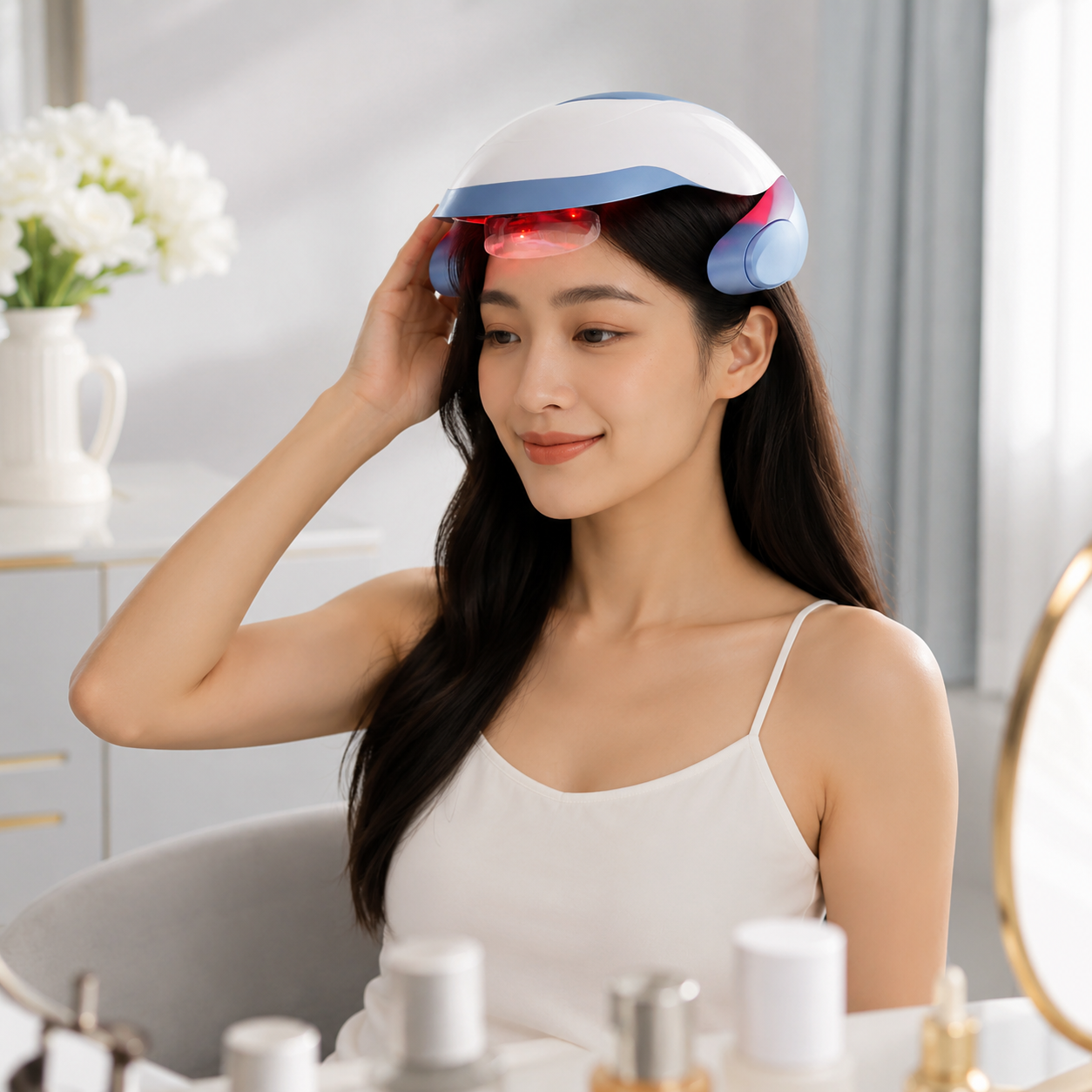
Red light therapy for hair growth is a scalp-focused treatment for people dealing with thinning hair, weaker density, early pattern hair loss, or areas where the scalp is becoming more visible. Instead of treating hair growth as only a shampoo, serum, or styling issue, it focuses on the scalp and follicles, where healthy-looking hair starts.
The goal is not an overnight transformation. Red light therapy works best as part of a consistent scalp care routine, especially when thinning is still in the early to moderate stage, and follicles are still active.
This guide explains why hair gets thinner, how red light therapy works for hair growth and bald spots, what a healthy scalp routine should include, what progress can look like over time, and when an at-home hair growth device makes sense.
Why Hair Gets Thinner, Weaker, or Less Dense
Hair can start to look thinner for many reasons. For some people, it is a gradual pattern of thinning around the hairline, crown, or part line. For others, it shows up as shedding, reduced volume, weaker strands, or areas where the scalp becomes more visible.
Common reasons include genetics, hormonal shifts, stress, aging, postpartum changes, nutrition, scalp health, medication, illness, or styling damage. In men, thinning often appears around the temples, hairline, or crown. In women, it often appears as widening at the part, reduced density across the top of the scalp, or more diffuse thinning.
The scalp matters because healthy-looking hair depends on the environment around the follicle. If the scalp is neglected, inflamed, overloaded with product buildup, or affected by underlying health changes, the hair can look weaker even if the strands themselves are being treated with shampoos or conditioners.
Sudden, patchy, severe, or unexplained hair loss should be checked by a professional. A scalp care routine can support visible hair quality, but it should not replace medical advice when the cause of hair loss is unclear.
How Red Light Therapy Can Support Hair Loss and Thinning
This treatment uses targeted red wavelengths on the scalp to support the appearance of hair density, thickness, and scalp health. In hair growth routines, the goal is to create a consistent light-based treatment that supports active follicles over time.
It is different from standard haircare. Shampoo cleanses. Conditioner softens. Styling products shape the hair. Red light therapy focuses on the scalp and follicle environment, which makes it more relevant for people dealing with visible thinning or reduced density.
A red light routine is usually best for people with early to moderate thinning where there are still active follicles. It is not a one-session fix, and it does not guarantee the same result for everyone. The value comes from repeated use over a longer period, especially when paired with a healthy scalp care routine.
Red Light Therapy for Bald Spots, Thinning Areas and Early Hair Loss
Thinning areas respond best when there are still active follicles beneath the scalp. That means it is often better suited to early hair loss, reduced density, widening part lines, weaker-looking hair, or thinning around the crown than areas that have been completely bald for a long time.
For visible thinning, red light therapy works best when the scalp and active follicles are treated consistently over time. A steady routine gives thinning areas a better chance to look fuller, healthier, and stronger as density improves.
Bald spots depend more on follicle activity. Areas with fine, miniaturized, or weakened hairs have more potential to respond than areas that have been completely inactive for years. That is why starting early matters, while the scalp still shows signs of active growth.
This is why timing matters. Starting a routine earlier, when thinning is first becoming noticeable, usually makes more sense than waiting until the scalp has large areas with little visible hair activity.
Building a Scalp Care Routine for Thicker-Looking Hair
For the treatment to reach the scalp properly, start with a clean, product-light treatment area. Heavy oils, thick styling products, dry shampoo, or buildup can sit between the device and the scalp, so cleaner scalp days are usually the best time for a session.
The routine does not need to be complicated. Choose the days you are most likely to stay consistent, keep the scalp comfortable, and avoid layering too many treatments at once. If your hair is freshly washed or lightly styled, that is usually a better time for a red light session than when the scalp is coated with product.
The rest of your hair routine should also protect the progress you are trying to build. Tight hairstyles, excessive heat, harsh brushing and aggressive scalp scrubbing can make thinning hair look more fragile, especially around the hairline, crown, and part line. Keep the routine gentle so the scalp has a better environment to support stronger, healthier-looking hair over time.
A simple weekly approach should include:
-
Red light sessions on cleaner scalp days
-
Gentle cleansing to reduce buildup
-
Minimal tension on the hairline and crown
-
Consistent treatment timing across the week
-
Regular progress checks every few months, not every few days
The goal is to create a routine that gives thinning areas the right environment to improve over time. Red light therapy can be the treatment step, but the rest of the routine should make it easier for the scalp and hair to stay healthy-looking between sessions.
What Hair Growth Progress Looks Like Over Time
Hair growth progress takes longer than skincare results because hair grows slowly. The first few weeks are usually about building the habit and giving the scalp consistent support, not expecting dramatic changes in the mirror.
A realistic timeline looks more like this:
| Stage | What to expect |
| First few weeks | Routine building, scalp consistency and early signs of healthier-looking hair quality |
| 2-3 months | Hair may begin to look stronger, with better overall scalp and density support |
| 4+ months | More visible changes in thickness, coverage and density may become easier to assess |
Progress can also feel uneven. Some people notice less visible shedding first. Others notice stronger-looking hair before they see fuller coverage. Because hair cycles are slow, judging the routine too early can be misleading.
Consistency matters, but so does the cause of the hair loss. If thinning is linked to hormones, medication, illness, nutritional deficiency, or another underlying issue, red light therapy works best as part of a broader hair and scalp care plan.

Male vs Female Hair Thinning Patterns
Red light therapy is used by both men and women for hair thinning, but the pattern of thinning often looks different. Men often notice changes around the hairline, temples, or crown, while women more commonly see widening through the part line or reduced density across the top of the scalp. Understanding the pattern helps shape a more targeted routine, because the treatment should focus on the areas where thinning is most visible.
This difference matters because the treatment area should match the thinning pattern. A routine focused only on the front hairline may not make sense for someone with diffuse thinning across the scalp. Likewise, someone with crown-focused thinning needs coverage where the issue is actually visible.
That is why scalp coverage, treatment modes, and ease of positioning are important when choosing a red light hair growth device.
What Makes a Hair Growth Device Different From Regular Haircare
Regular haircare mostly works on the hair and scalp surface. It can cleanse, hydrate, smooth, or protect, but it does not create the same treatment-led experience as a red light device.
A hair growth device is built to make the routine more targeted. Instead of adding another product to the scalp, it gives users a repeatable treatment step focused on thinning areas, follicle support, and scalp coverage.
The most useful devices are the ones that reduce friction. A wearable crown or cap-style format is easier to repeat than a handheld tool that needs to be moved around the scalp manually. For hair growth routines, that matters because progress depends on consistent sessions over time.

What to Look for in an At-Home Hair Growth Device
A good at-home hair growth device should make the routine targeted, comfortable, and easy to repeat. Look for a design that reaches the thinning areas properly, uses scalp-focused red light technology, and gives enough guidance to match the treatment to your hair loss pattern.
The Artemis LED Crown is the dedicated hair device in the Artemis range, designed for people who want a more structured at-home routine for thinning hair, reduced density, and early pattern hair loss.
Instead of relying on a handheld tool that needs to be moved around the scalp, the Crown uses a wearable design that makes treatment easier to repeat. It combines red LEDs and laser diodes with 655nm red light, a wavelength commonly used in scalp-focused hair growth devices.
What makes the device especially relevant for this guide is the way it accounts for different thinning patterns. The Artemis LED Crown includes personalized modes based on common male and female hair loss classifications, including Norwood-Hamilton and Ludwig-Savin patterns. That means the routine can be better matched to where thinning is most visible, whether that is the hairline, crown, part line, or wider areas of reduced density.
The design is also built for ease of use. It is lightweight, wearable, and comes with a cradle, making it easier to keep charged, stored, and ready for regular sessions. For hair growth routines, that matters because the best device is not just the most advanced one. It is the one people can realistically keep using over time.
The Takeaway: A Scalp-First Routine for Fuller-Looking Hair
A hair growth routine is strongest when it starts with the scalp, not just the hair shaft. Thinning hair, weaker density, and early pattern hair loss often need a routine that goes beyond shampoo, conditioner, or styling products.
A scalp-first approach targets the foundation of healthier-looking hair. With a consistent red light routine and the right device, thinning areas have a stronger chance to look fuller, denser, and healthier over time without turning haircare into an overcomplicated process.
Related Articles
#All #All
#AllLED Light Therapy for Under-Eye Bags
Read More #All
#AllRed Light vs Blue Light Therapy
Read More #All
#AllLED Face Mask Guide: Benefits and Routine Tips
Read More #All
#AllLED Light Therapy vs Microcurrent
Read More #All
#AllLED Light Therapy for Oily Skin
Read More #All
#AllBest Treatment for Sun-Damaged Skin
Read More #All
#AllHow to Repair a Damaged Skin Barrier
Read More #All
#AllHow to Fade Post-Acne Marks
Read More #All
#AllRed Light Therapy for Skin Texture
Read More #All
#AllMorning vs Night: When to Use an LED Mask
Read More #All
#AllLED Light Therapy for Neck and Décolleté
Read More #All
#AllLED Mask for Aging Skin
Read More#All
The 10 Best LED Masks Recommended by Dermatologists in 2026
Read More#All
The 10 Best LED Light Therapy Face Masks in 2026
Read More
/
Featured Products
Our most-loved products, hand-picked for you.


