

 #All
#AllLED Face Mask Guide: Benefits and Routine Tips
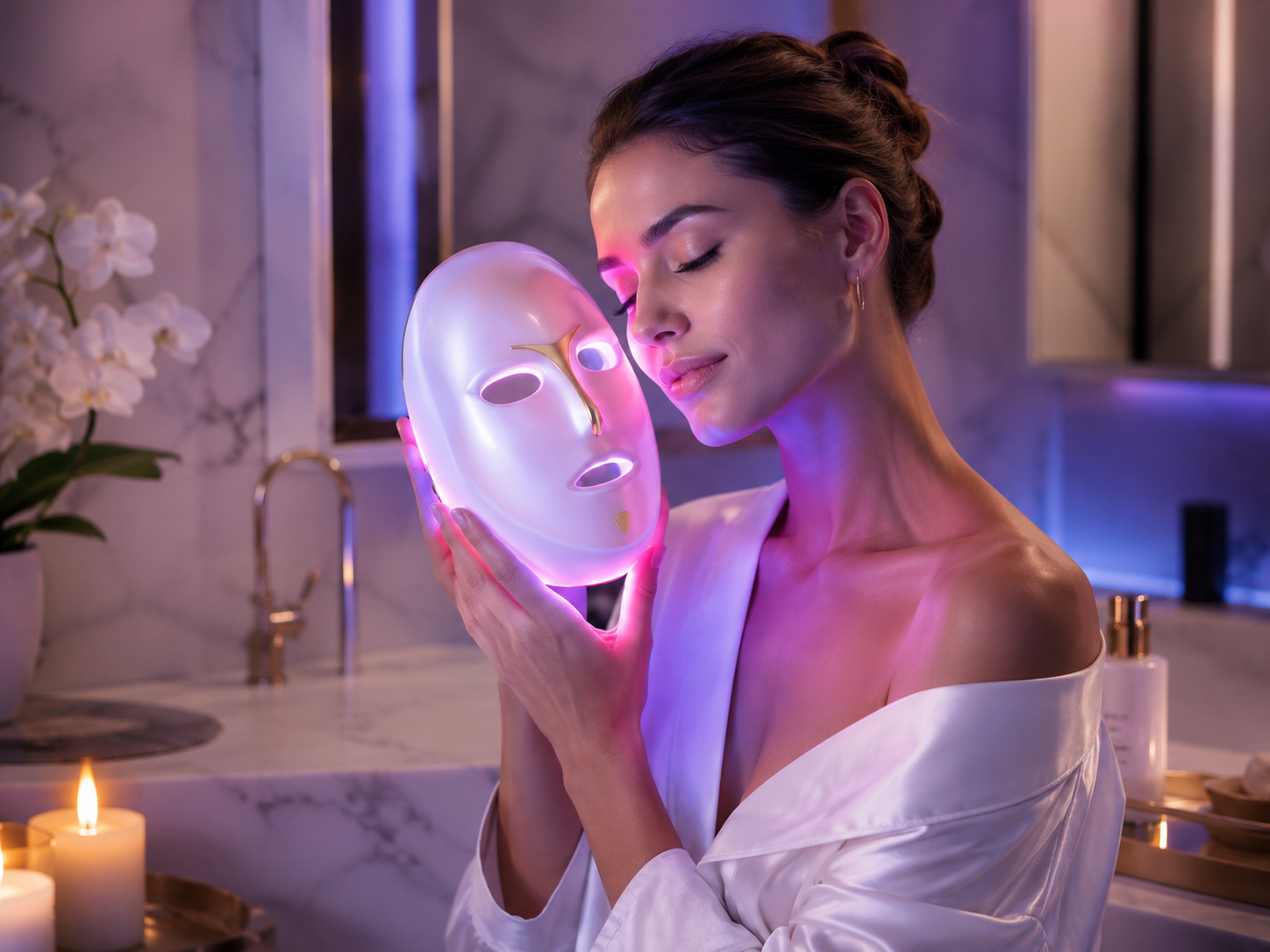
For anyone wanting more from their skincare routine, an LED face mask can add a more advanced treatment step to your skincare routine without replacing the basics. Cleansing, moisturizing, and SPF still matter, but LED light therapy can support common skin goals like a brighter-looking complexion, smoother texture, clearer-looking skin, and a calmer overall appearance when used consistently.
This guide explains what LED face masks do, which skin concerns they are commonly used for, how they compare with serums, how to use one in your routine and what to expect in your first month.
What an LED Face Mask Does for Your Skin
An LED face mask uses specific wavelengths of light to support the appearance of the skin. Unlike exfoliating acids, peels or resurfacing treatments, LED light therapy is not designed to strip the skin or create visible peeling. It is a non-invasive step that works best through repeated use.
The main appeal is that it gives your routine a treatment-led layer. Instead of only applying topical products, you are adding targeted light exposure that can support the look of tone, texture, clarity and firmness over time.
It is also important to separate LED from UV. LED masks use visible and near-infrared light during treatment, not tanning-style UV exposure. That means the routine is not the same as sun exposure, though you should still follow the device instructions and use eye protection properly.
Common Skin Concerns an LED Mask Routine Can Support
Most people start looking into LED masks because they want more from their routine than basic hydration. The goal is usually not one single concern, but a mix of visible skin improvements.
An LED mask routine is commonly used to support:
- Brighter, healthier-looking skin
- Smoother-looking texture
- The appearance of fine lines
- Clearer-looking skin
- Calmer-looking skin
- More even-looking tone
This makes LED especially useful for people who want one repeatable routine step that can support several skin goals at once. The key is consistency. A single session can feel like a nice self-care step, but visible improvement usually comes from using the mask several times per week over time.

LED Masks vs Serums: What Each Step Does for Your Skin
LED masks and serums are not trying to do the same job. Serums work topically. Depending on the formula, they may support hydration, brightness, exfoliation, barrier care, or targeted active ingredient delivery. They are still an important part of a well-built routine.
Instead of adding another product layer, the routine becomes more treatment-focused. Targeted light exposure gives skincare a different kind of support, making it useful for people who already cleanse, moisturize, and use serums, but want a more advanced way to support glow, texture, clarity, and overall skin quality.
The strongest routine usually uses both in the right order: the mask as the treatment step, then supportive skincare afterwards.
Adding an LED Mask to Your Skincare Routine
The easiest way to add an LED mask to your routine is to keep the steps simple. Start with clean, dry skin so there is no makeup, oil, or heavy skincare sitting between the mask and your skin.
A simple routine order looks like this:
Cleanse → dry skin fully → use LED mask → apply serum or moisturizer → finish with SPF in the morning
Morning routine
A morning routine works well if you want skin to look fresher before makeup or before starting the day. Cleanse, use the mask, apply lightweight hydration, and finish with sunscreen.
Keep this version simple. The mask should be the main treatment step, not one of several competing actives.
Evening routine
An evening routine is often easier to repeat because it fits naturally after cleansing. Use the mask on dry skin, then apply a calming serum or moisturizer.
If your evening routine already includes retinol, exfoliating acids or stronger actives, avoid overcomplicating the session. LED works best in a routine that supports the skin barrier rather than overwhelming it.
Red, Blue and Near-Infrared: Choosing the Right Mask Mode
Different light modes are used for different skin priorities. A multi-color LED mask gives you more flexibility because your skin does not always need the same type of support every day.
| Light mode | Common skincare focus |
| Red light | Fine lines, firmness and smoother-looking skin |
| Near-infrared | Skin renewal, firmness and deeper support |
| Blue light | Breakout-prone or oily-looking skin |
| Green light | Uneven-looking tone and dark spots |
| Yellow light | Redness-prone or sensitive-looking skin |
| Violet light | Combined red and blue light routine |
| Sky blue light | Stressed-looking or reactive-looking skin |
This is where LED masks become more useful than a one-setting skincare tool. Some days your focus may be glow and smoothness. Other days it may be clarity, tone, or calmness. Choosing the right mode makes the routine feel more personal and more relevant to what your skin needs.
What to Expect in Your First Month of Using an LED Mask
The first month is mostly about building the habit and understanding how your skin responds. LED light therapy is not a one-session treatment, so the most realistic expectation is gradual improvement.
In the first few sessions, skin often looks fresher and more awake after treatment. As the routine builds over several weeks, you can expect a more balanced-looking complexion, calmer appearance and smoother overall finish.
Fine lines, firmness and texture usually need more time. These are longer-term skin goals, so the first month should be treated as the foundation stage. The aim is to create a routine you can keep repeating comfortably.
If your skin is melasma-prone, you take photosensitizing medication, or you have a photosensitive condition, check with a clinician before starting light therapy.

Which LED Mask System Fits Your Routine Best?
There are many LED skincare devices on the market, but the best choice depends on how much coverage, customization, and comfort you want from your routine. Some masks are built for basic face-only treatments, while more advanced systems give you multiple light modes, better coverage and more control over how each area is treated.
This is where Artemis stands out. The Artemis LED Mask is the core face-focused option, built with 720 LEDs for the face, built-in eye guards, and multiple wavelength options including red, near-infrared, blue, violet, green, yellow, and sky blue. It also includes app-based personalization, allowing users to customize up to 16 facial treatment zones depending on their skin goals.
For a more complete routine, the Artemis LED Mask & Neck System adds the neck plate for face, neck, and décolleté coverage. This system includes 1080 LEDs total, with 720 for the face and 360 for the neck, making it the better option for users who want a more uniform routine beyond the face.
The most complete option is the Artemis LED Complete System, which includes the face and neck routine with added sanitizing and easy recharging. This is the best fit for users who want the full Artemis setup in one system, especially if they care about storage, cleanliness, and keeping the device ready to use.
Beyond Another Serum: The Role of LED in Skincare
LED brings a different kind of support to your routine than another serum or cream. Topical skincare still matters, but there is a limit to how many products most routines need. At a certain point, adding more layers can make skincare feel complicated without necessarily making it more effective.
Instead of adding another product layer, an LED mask introduces a treatment-focused step. It can support several visible skin goals at once, including glow, texture, clarity, fine lines and overall skin quality. That makes it especially useful for people who already cleanse, moisturize and use SPF, but still want a more advanced way to support better-looking skin at home.
The real value is that the mask can make your routine feel more complete without overloading it. Rather than buying another bottle and hoping it fills the gap, you are adding a flexible device that works alongside the products you already use. For brighter, healthier-looking skin, that kind of step can be more useful than simply adding one more formula to your shelf.
Related Articles
#All #All
#AllLED Light Therapy for Under-Eye Bags
Read More #All
#AllRed Light vs Blue Light Therapy
Read More #All
#AllLED Face Mask Guide: Benefits and Routine Tips
Read More #All
#AllLED Light Therapy vs Microcurrent
Read More #All
#AllLED Light Therapy for Oily Skin
Read More #All
#AllBest Treatment for Sun-Damaged Skin
Read More #All
#AllHow to Repair a Damaged Skin Barrier
Read More #All
#AllHow to Fade Post-Acne Marks
Read More #All
#AllRed Light Therapy for Skin Texture
Read More #All
#AllMorning vs Night: When to Use an LED Mask
Read More #All
#AllLED Light Therapy for Neck and Décolleté
Read More #All
#AllLED Mask for Aging Skin
Read More#All
The 10 Best LED Masks Recommended by Dermatologists in 2026
Read More#All
The 10 Best LED Light Therapy Face Masks in 2026
Read More
/
Featured Products
Our most-loved products, hand-picked for you.


