

 #All
#AllLED Light Therapy for Oily Skin
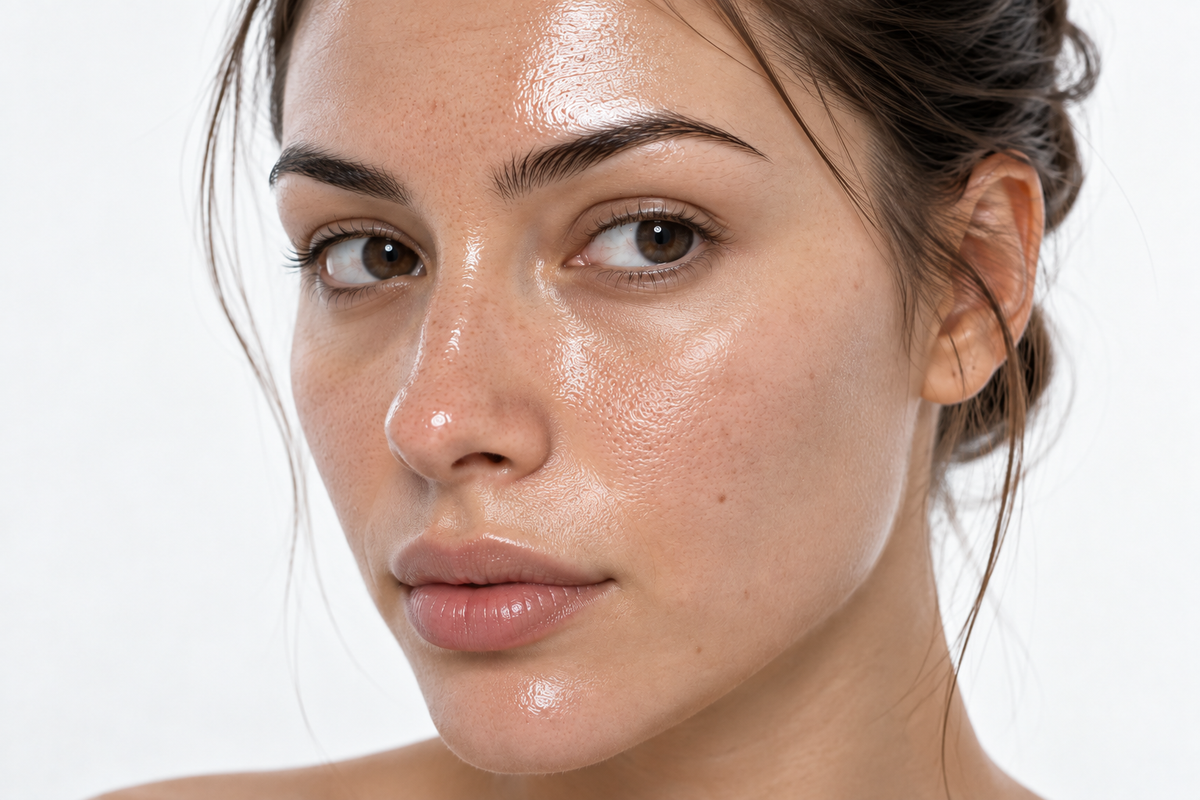
Oily skin is usually treated as a problem to be stripped away, and that instinct accounts for a good deal of why it persists. Harsh cleansers, frequent exfoliation, and mattifying products all remove oil at the surface, and skin that has been stripped tends to produce more rather than less to compensate.
LED light therapy takes a different route by acting on the follicles where oil is produced rather than on the oil already sitting on the skin. It works slowly compared with anything that removes shine immediately, and it does not leave skin reacting the way stripping does.
What Causes Oily Skin
Sebum is produced by sebaceous glands attached to each hair follicle, and how much they produce is set largely by genetics and hormones rather than by anything applied to the skin. Androgens drive the process, which is why oiliness typically increases during adolescence, fluctuates across the menstrual cycle, and often changes with hormonal shifts later in life.
Environment and routine adjust the output rather than setting it. Heat and humidity increase production, while over-cleansing and harsh actives trigger a rebound as skin compensates for lipids stripped from the surface. Dehydration produces the same effect for a different reason, since skin low on water often increases oil production in response, which is why some of the shiniest skin is also the most dehydrated.
Signs You Have Oily Skin
Genuinely oily skin behaves consistently rather than occasionally, and the signs are recognizable once separated from skin that is temporarily reacting to something:
- Shine returning within hours of cleansing, particularly across the forehead, nose and chin
- Visibly enlarged pores, most noticeably on the nose and inner cheeks
- Makeup breaking down or sliding within a few hours of application
- Frequent congestion, including blackheads and small bumps under the surface
- A thicker skin texture, which often ages more slowly than dry skin does
- Blotting papers coming away saturated rather than lightly marked
The distinction worth drawing is between oily and dehydrated skin. Skin that feels tight underneath while looking shiny on top is producing oil to compensate for water loss, and treating it as oily makes the cycle worse rather than better.
Does LED Light Therapy Help Oily Skin?
It helps, though the mechanism is slower and narrower than most oil-control products promise. Blue light at around 470nm acts on the bacteria that thrive in oily follicles and appears to influence sebaceous activity, while red light and near-infrared work deeper on the structure surrounding each follicle.
What light therapy does not do is remove oil that is already on the skin, which is what blotting papers, clay masks, and mattifying primers do within minutes. The trade is that those results last hours while light therapy accumulates across weeks, and it does so without stripping the barrier and triggering the rebound that follows.
For most people, the useful framing is that light therapy reduces how much oil arrives rather than managing what has already arrived, which makes it a routine addition rather than a replacement for anything used during the day.
Blue Light for Oil Control
Blue light at around 415 to 470nm penetrates the least of any wavelength used in these devices, reaching the epidermis and the follicles within it, which is precisely where oily skin's problems sit.
Its best-documented action is on Cutibacterium acnes, the bacteria involved in congestion, which absorbs blue light and produces reactive oxygen species that damage the bacterial cell. Oily skin provides the environment those bacteria prefer, so reducing the population addresses the congestion that accompanies oiliness even where breakouts are not the main concern.
The effect on sebum production itself is less firmly established than the antibacterial action, though it is the reason blue light appears in devices aimed at oil control rather than only at acne. The practical caution is that blue light can be drying, which suits oily skin better than most and still argues for targeting congested areas rather than treating the whole face at every session.
Why Red Light Matters for Oily Skin
The instinct with oily skin is to treat it entirely with blue, and that leaves most of the picture untreated. Enlarged pores are the clearest example, since pore size is influenced by the structure surrounding each follicle rather than by the oil passing through it, and skin losing collagen holds that structure less firmly, so the opening loses definition.
Red light at around 635nm and near-infrared at around 850nm reach the dermis where that structure sits, supporting the fibroblasts that produce collagen and elastin. A randomized trial using these wavelengths recorded improvements in elasticity alongside histological increases in collagen, which is the mechanism behind pores appearing smaller even though nothing about their actual size has changed.
Red light also addresses what oily skin is left with after congestion clears. Post-inflammatory marks respond to improved skin quality over time, and the texture irregularity that accompanies chronic congestion improves on the same basis, neither of which blue light does anything for.
LED Light Therapy by Concern

| Concern | Wavelength | What to expect |
|---|---|---|
| Active congestion and breakouts | Blue, around 470nm | Reduction over several weeks of regular sessions |
| Excess shine | Blue, with red supporting | Gradual and less pronounced than topical control |
| Enlarged pores | Red with near-infrared | Improved definition rather than smaller openings |
| Post-breakout marks | Red, with green for pigment | Months rather than weeks |
| Uneven texture | Red with near-infrared | Steady improvement from around eight weeks |
| Redness from over-treating | Yellow, around 590nm | Settles as the barrier recovers |
Oily skin rarely presents as one problem, since shine, congestion, enlarged pores and the marks left behind all arrive together, and the wavelengths suit different parts of it rather than one covering everything. The pattern is that blue addresses what oily skin produces while red addresses what oiliness leaves behind, and skin dealing with both is served by a device that runs each where it belongs rather than applying one setting across the face.
Mistakes That Make Oily Skin Worse
Most oily skin routines fail by doing too much, and the damage compounds because stripped skin produces more oil rather than less.
Over-Cleansing
Washing three or four times daily, or using a foaming cleanser that leaves skin squeaky, removes lipids alongside the oil. Skin compensates within hours, which produces a cycle where more cleansing generates more oil.
Skipping Moisturizer
Oily skin still needs water, and leaving moisturizer out drives the dehydration that increases sebum production, which is the same rebound over-cleansing produces by a different route. A light gel formula addresses it without adding to the shine, and skipping it rarely leaves skin less oily by the end of the day.
Stacking Strong Actives
Salicylic acid, benzoyl peroxide, and retinoids are all reasonable for oily skin individually, and using them together frequently damages the barrier, which produces redness and sensitivity on top of the original problem.
Using Blue Light Everywhere
Treating the whole face with blue light at every session dries areas that were not oily to begin with, since oiliness concentrates in the T-zone on most faces while the cheeks run normal or dry.
Chasing Immediate Results
Mattifying products work within minutes, and light therapy works across weeks, and judging the second by the standard of the first leads people to abandon a routine at the point it starts working.
Finding a Mask That Suits Oily Skin

Most masks sold for oily skin lead with blue light and stop there, which is why so many end up disappointing. Blue addresses congestion and does nothing for the enlarged pores, uneven texture, and post-breakout marks that oily skin accumulates alongside it, and a device limited to one wavelength leaves the majority of the complaint untreated.
The second thing worth checking is whether blue can be run selectively rather than across the whole face. Oiliness concentrates in the T-zone on most people while the cheeks run normal or dry, and a mask that applies blue everywhere at every session dries the areas that were never the problem, which is how an oil-control routine ends up producing redness and sensitivity.
The Artemis LED Mask runs blue at 470nm, red at 635nm, and near-infrared at 850nm alongside green, yellow, and sky blue, across 720 LEDs at 45mW/cm². Its app assigns any of those to 16 separate facial zones, so blue treats the T-zone while red works across the cheeks in a single session, and yellow is available for anyone whose skin has already become reactive from over-treating.
Built-in eye guards keep anything unnecessary off the skin, and the full Artemis range adds a neck plate for anyone whose oiliness extends below the jawline.
Conclusion: Managing Oily Skin
Oil production is set largely by genetics and hormones, which means the realistic aim is managing it rather than eliminating it, and routines built around removal tend to make the situation worse by triggering the rebound that follows stripping.
Light therapy fits the opposite approach, acting on the follicles and the surrounding structure rather than on the surface, with blue addressing congestion and red addressing the pores and texture that oiliness leaves behind. It works slowly, and it does not damage the barrier in the process, which is what separates it from most of what oily skin is usually given.
The rest comes down to restraint. Cleansing twice daily rather than four times, moisturizing rather than skipping it, introducing one active at a time, and giving any routine three months before judging it will do more for oily skin than any single product, including this one.
Related Articles
#All #All
#AllLED Light Therapy for Under-Eye Bags
Read More #All
#AllRed Light vs Blue Light Therapy
Read More #All
#AllLED Face Mask Guide: Benefits and Routine Tips
Read More #All
#AllLED Light Therapy vs Microcurrent
Read More #All
#AllLED Light Therapy for Oily Skin
Read More #All
#AllBest Treatment for Sun-Damaged Skin
Read More #All
#AllHow to Repair a Damaged Skin Barrier
Read More #All
#AllHow to Fade Post-Acne Marks
Read More #All
#AllRed Light Therapy for Skin Texture
Read More #All
#AllMorning vs Night: When to Use an LED Mask
Read More #All
#AllLED Light Therapy for Neck and Décolleté
Read More #All
#AllLED Mask for Aging Skin
Read More#All
The 10 Best LED Masks Recommended by Dermatologists in 2026
Read More#All
The 10 Best LED Light Therapy Face Masks in 2026
Read More
/
Featured Products
Our most-loved products, hand-picked for you.


