

 #All
#AllHow to Repair a Damaged Skin Barrier
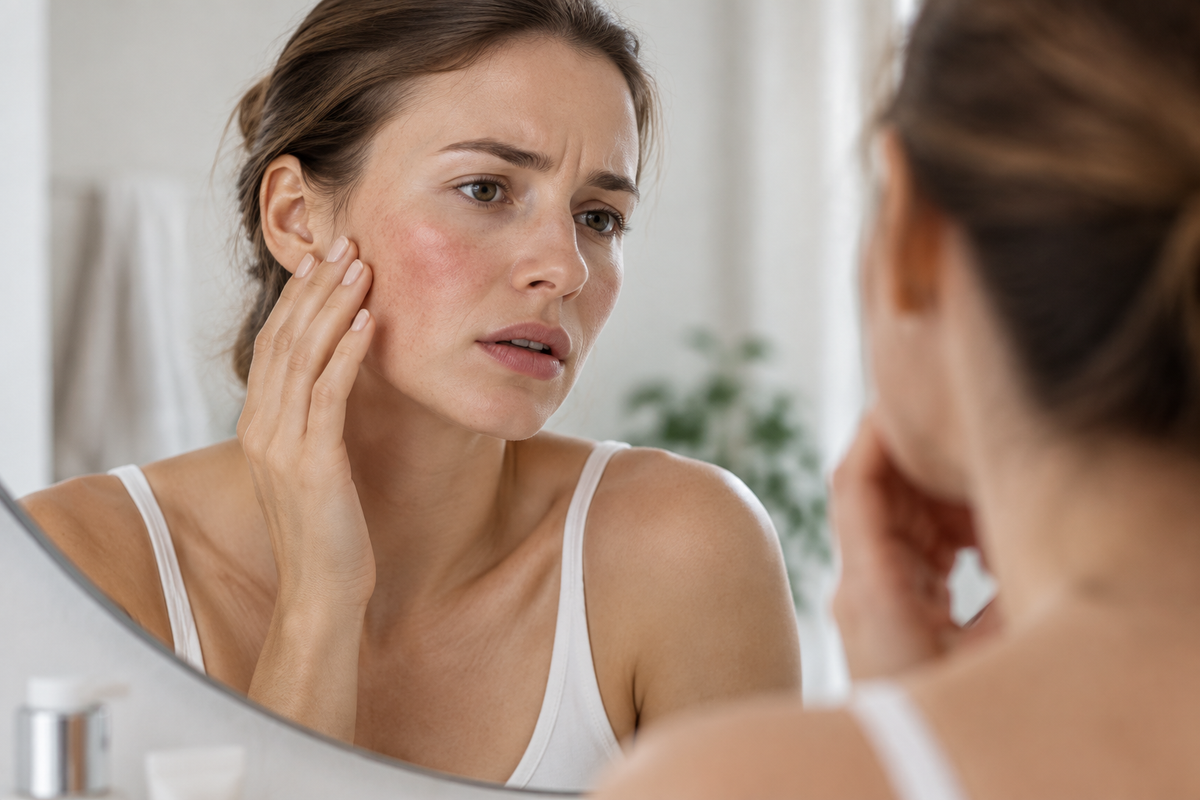
A damaged skin barrier is the most common reason a skincare routine stops working, and it is usually caused by the routine itself. Stinging, tightness, redness, and sudden sensitivity to products that were fine last month all point to the same thing, which is a protective layer that has been worn down faster than it can rebuild.
The good news is that barrier repair is mostly subtraction rather than addition. Skin rebuilds its own barrier given the chance, and the fastest route back is removing what is damaging it rather than layering something new on top.
What the Skin Barrier Does
The skin barrier is the outermost layer of the epidermis, made up of flattened cells held together by a matrix of lipids including ceramides, cholesterol, and fatty acids. The usual comparison is a brick wall, with the cells as bricks and the lipids as mortar, and the analogy holds well enough to be useful.
Its job runs in both directions. It holds water in, which is what keeps skin plump and comfortable, and it keeps irritants, allergens, and bacteria out. When the mortar thins, water escapes more easily, and everything else reaches deeper than it should, which is why barrier damage produces dryness and sensitivity at the same time rather than one or the other.
Signs of a Damaged Skin Barrier
Barrier damage announces itself through discomfort before it shows visibly, and the signals are consistent enough that two or three appearing together is a reasonable indication:
- Stinging or burning when applying products that were previously fine
- Tightness after cleansing that does not settle within a few minutes
- Flaking or roughness, often in patches rather than across the whole face
- Persistent redness that stays rather than fading within an hour
- Increased sensitivity to temperature, wind, or fragrance
- Dehydration that moisturizer does not fix, since the water escapes as fast as it goes on
- Breakouts alongside dryness, which is a combination that rarely appears otherwise
All of them at once usually means the barrier has been compromised for a while and the routine has been adding to it rather than helping, which is worth knowing before buying anything new to fix it.
What Causes Skin Barrier Problems
Most barrier damage is self-inflicted through a routine that’s doing too much, though environment and age contribute alongside it, and the causes below frequently overlap rather than appearing one at a time.
Over-Exfoliation
The most common cause by a wide margin. Acids and physical scrubs remove the outermost cells faster than skin replaces them, and using them several times a week strips the lipid matrix along with the dead cells it was holding together.
Too Many Actives at Once
Retinoids, vitamin C, acids, and benzoyl peroxide all work by disrupting the skin to prompt a response. Each is manageable alone, and the combination frequently is not, particularly when several are introduced in the same week.
Harsh Cleansers
Anything that leaves skin feeling squeaky has stripped lipids rather than simply removing dirt. Foaming cleansers with high surfactant loads are the usual culprits, and using them twice daily compounds the effect.
Environmental Exposure
Cold air, wind, low humidity, and hot water all pull moisture from the skin and thin the lipid layer. Winter barrier damage is common enough that many people assume their skin simply changes seasonally when the barrier is actually struggling.
Age
Lipid production declines gradually from the thirties onward, so the same routine that worked for years can begin to cause problems without anything else having changed.
How Long Skin Barrier Repair Takes

Most barriers recover within two to four weeks given the right conditions, though the timeline depends on how compromised the barrier was and how completely the damage stops. Comfort returns first, usually within the first week, with stinging settling and skin feeling less tight after cleansing. Visible improvement follows over the second and third weeks as flaking resolves and redness reduces, and full recovery of function takes closer to a month since the lipid matrix has to be rebuilt rather than simply replenished.
Severe damage takes longer, sometimes two to three months, and anyone still seeing no improvement after a month of a stripped-back routine should see a dermatologist rather than continuing to adjust products, since persistent symptoms may point to a condition rather than to barrier damage alone.
What Makes a Damaged Skin Barrier Worse
The instinct when skin misbehaves is to add something, and it is almost always the wrong move. A compromised barrier needs fewer inputs rather than a corrective product layered over the existing routine.
| Pause while healing | Keep using |
|---|---|
| Exfoliating acids, AHAs and BHAs | A gentle, non-foaming cleanser |
| Physical scrubs and cleansing brushes | A simple ceramide moisturizer |
| Retinoids and retinol | Sunscreen, every morning |
| Vitamin C in high concentrations | Occlusives at night if skin is very dry |
| Benzoyl peroxide | Plain water for rinsing |
| Fragranced products and essential oils | Nothing else until symptoms settle |
Hot water deserves particular mention, since it strips lipids more effectively than most cleansers and long hot showers undo a good deal of careful product selection, so lukewarm water is enough for everything skincare requires. Layering multiple new products at once is the other common mistake, because it makes any reaction impossible to attribute and usually introduces something the skin was not ready for.
Building a Skin Barrier Repair Routine
The repair routine is shorter than whatever preceded it, and that is the point rather than a compromise. Cleansing should be gentle and once daily for most people, using a cream or milk formula in the evening and plain water in the morning while skin is recovering. Anything that foams heavily or leaves a squeaky finish is working against the repair.
Moisturizing is where the actual rebuilding happens, and the ingredients that matter are ceramides, cholesterol, and fatty acids, since those are what the lipid matrix is made of. Niacinamide supports the process by encouraging the skin's own ceramide production, while glycerin and hyaluronic acid hold water in the upper layers and panthenol calms the inflammation that accompanies barrier damage.
Sunscreen stays in the routine throughout, since ultraviolet exposure damages the barrier further and a recovering barrier offers less protection than a healthy one. A mineral formula suits reactive skin better than a chemical filter during the repair period.
Actives come back gradually once symptoms have settled for a fortnight, introduced one at a time at reduced frequency rather than all at once, which is how most people end up back where they started.
How LED Light Therapy Helps Repair the Skin Barrier
Barrier repair is a cellular process rather than a cosmetic one, since rebuilding the lipid matrix depends on keratinocytes producing ceramides and fibroblasts maintaining the structure beneath them. Red light at around 635nm and near-infrared at around 850nm are absorbed by mitochondria in those cells, supporting the energy production both processes run on, and a randomized trial using these wavelengths recorded improvements in elasticity alongside histological increases in collagen and elastic fibers.
What makes it suited to this situation specifically is what it does not do. Nothing is applied, no layer is removed, and there is no adjustment period, so it runs through a stripped-back routine without adding to the problem, which is unusual in a category where most treatments work by disrupting the skin to prompt a response. Sessions go on clean, dry skin with moisturizer applied afterward, though blue light is worth leaving out during repair since it can be drying on a barrier that is already struggling.
Choosing a Mask for Compromised Skin

Wavelength range matters here because a recovering barrier needs red and near-infrared rather than the full spectrum, and a device offering separate control lets the others wait until skin has settled.
Fit matters as much, since light intensity falls with distance and a mask sitting away from the skin delivers less to those areas. Flexible construction that follows the contours of the face keeps delivery even, and a lightweight device is easier to tolerate on skin that is already uncomfortable.
The Artemis LED Mask carries 720 LEDs across the face at 45mW/cm², running red at 635nm and near-infrared at 850nm alongside blue, green, yellow, and sky blue. Its app assigns any wavelength to 16 separate facial zones, so red and near-infrared can run across the whole face during repair while blue stays confined to areas that need it, and built-in eye guards mean nothing sits against the skin that does not have to. The full Artemis range adds a neck plate for anyone extending the routine below the jawline.
Takeaway: Rebuilding a Damaged Barrier
Barrier repair works by removing what caused the damage rather than by finding the right product to fix it, and most routines recover within two to four weeks once the exfoliants, actives, and harsh cleansers stop. Comfort returns first, visible improvement follows over the second and third weeks, and full function takes closer to a month as the lipid matrix rebuilds.
What supports that is a short routine built around ceramides, gentle cleansing and daily sunscreen, with actives reintroduced one at a time only after symptoms have settled for a fortnight. Light therapy fits alongside it precisely because it asks nothing of the skin, though it supports the process rather than driving it.
Anyone still struggling after a month of a stripped-back routine should see a dermatologist, since persistent stinging, redness, or flaking can point to a condition that a simplified routine will not resolve on its own.
Related Articles
#All #All
#AllLED Light Therapy for Under-Eye Bags
Read More #All
#AllRed Light vs Blue Light Therapy
Read More #All
#AllLED Face Mask Guide: Benefits and Routine Tips
Read More #All
#AllLED Light Therapy vs Microcurrent
Read More #All
#AllLED Light Therapy for Oily Skin
Read More #All
#AllBest Treatment for Sun-Damaged Skin
Read More #All
#AllHow to Repair a Damaged Skin Barrier
Read More #All
#AllHow to Fade Post-Acne Marks
Read More #All
#AllRed Light Therapy for Skin Texture
Read More #All
#AllMorning vs Night: When to Use an LED Mask
Read More #All
#AllLED Light Therapy for Neck and Décolleté
Read More #All
#AllLED Mask for Aging Skin
Read More#All
The 10 Best LED Masks Recommended by Dermatologists in 2026
Read More#All
The 10 Best LED Light Therapy Face Masks in 2026
Read More
/
Featured Products
Our most-loved products, hand-picked for you.


